
Where the Herd Holds the Mirror: Chelsey Milton on Pasture Therapy and Trust
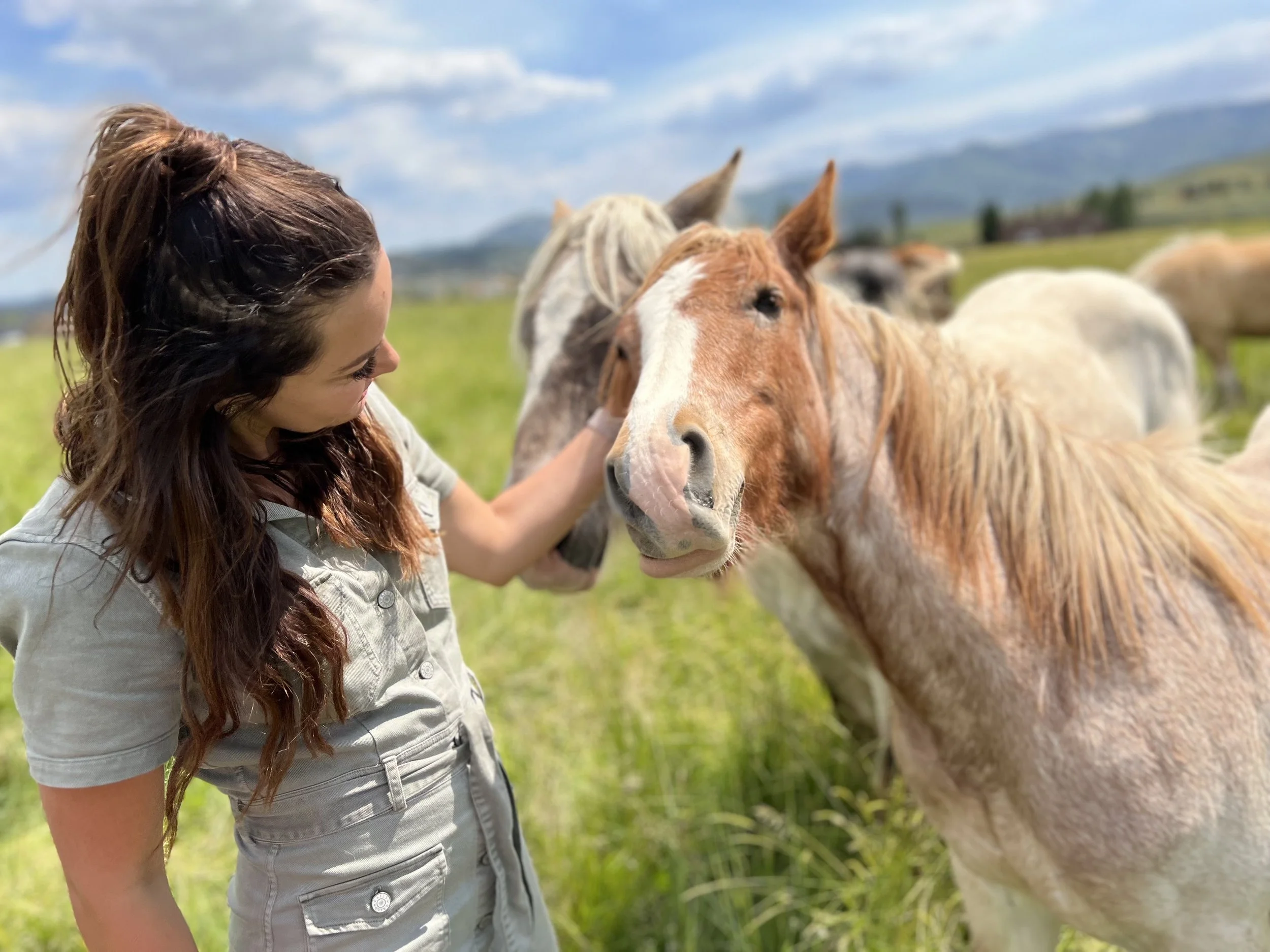
Interviewed by Beau Dunn
Before I ever set foot on her ranch, Chelsey Milton was already living a different kind of truth. Her life seemed braided with connection, animal instinct, and a quiet, old-world understanding that didn’t require the same kind of communication I’d known. I have always felt close to animals. They have been one of the constant sources of joy and grounding since childhood, but Chelsey, the heartbeat of Bar Milton Ranch, widened that bond into something deeper and dare I say, more honest.
She was the one who cracked open this other world for Tash and me. A world where open steps in open fields slows your breathing. Where the weight of a horse’s muzzle in your palm feels like acceptance, and where the slow hum of a pasture rearranges things inside you that you did not even know were out of place.
Pasture Therapy wasn't something Chelsey invented. It was more like a door she noticed in the side of her life and then held it open for Tash and me. A way of noticing. A way of listening. A way of circling back to yourself through the connection of animals and the wide, wordless language of open land.
These questions are an attempt to put Chelsey’s everyday philosophy into words: that we are meant for connection, that intuition is forgotten language we can all speak and that nature begins to heal us the very moment we stop trying to outrun it.
BD: How did the idea of Pasture Therapy first find you — was it something you intentionally envisioned, or something that emerged naturally in your rhythms with the land and the animals?
CM: It honestly is simple, spending time with your animals is my reason for having the animals. I was always drawn to naturally check on them multiple times a day. Checking on them would turn into hours of connection and building trust. It became so fulfilling to have this type of connection and naturally I wanted to share that with loved ones.
BD: Was there a specific moment, or a season of your life, when you realized that time in the pasture was offering a kind of healing nothing else could?
CM: I always tell my friends and family things are easily measured when you live in different places seasonally. In the summer and fall when I am able to live the ranch life, I always feel more settled in my nervous system and know it creates a type of balance I am not able to achieve elsewhere.
BD: How did the name Pasture Therapy come to you, and what meaning or symbolism does it hold in your heart?
CM: I cannot recall the instance when I started to call my time in the pasture “Pasture Therapy”. I'm sure it was something between my husband and I. I would go missing for hours and he always knew where to find me. I would come back more balanced and centered, so we must have labeled it “Chelsey’s therapy”. It now has become such a sacred practice for me.
BD: When you step into the pasture, what is your personal ritual? What unfolds in those first few quiet minutes before the herd even reaches you?
CM: I learned very quickly that my energy would be reflected back to me through the horses and cows. I generally would channel my nurturing nature and not have any expectations. Every year, we have new foals and calves, which means the process of building relationships starts fresh. I let everything go at the fence line and hope I can create a safe space for the animals, myself, and anyone I bring in the pasture with me.
BD: : How do the horses and mini cows respond when you arrive? Do you feel they reflect or sense your energy in ways words can’t capture?
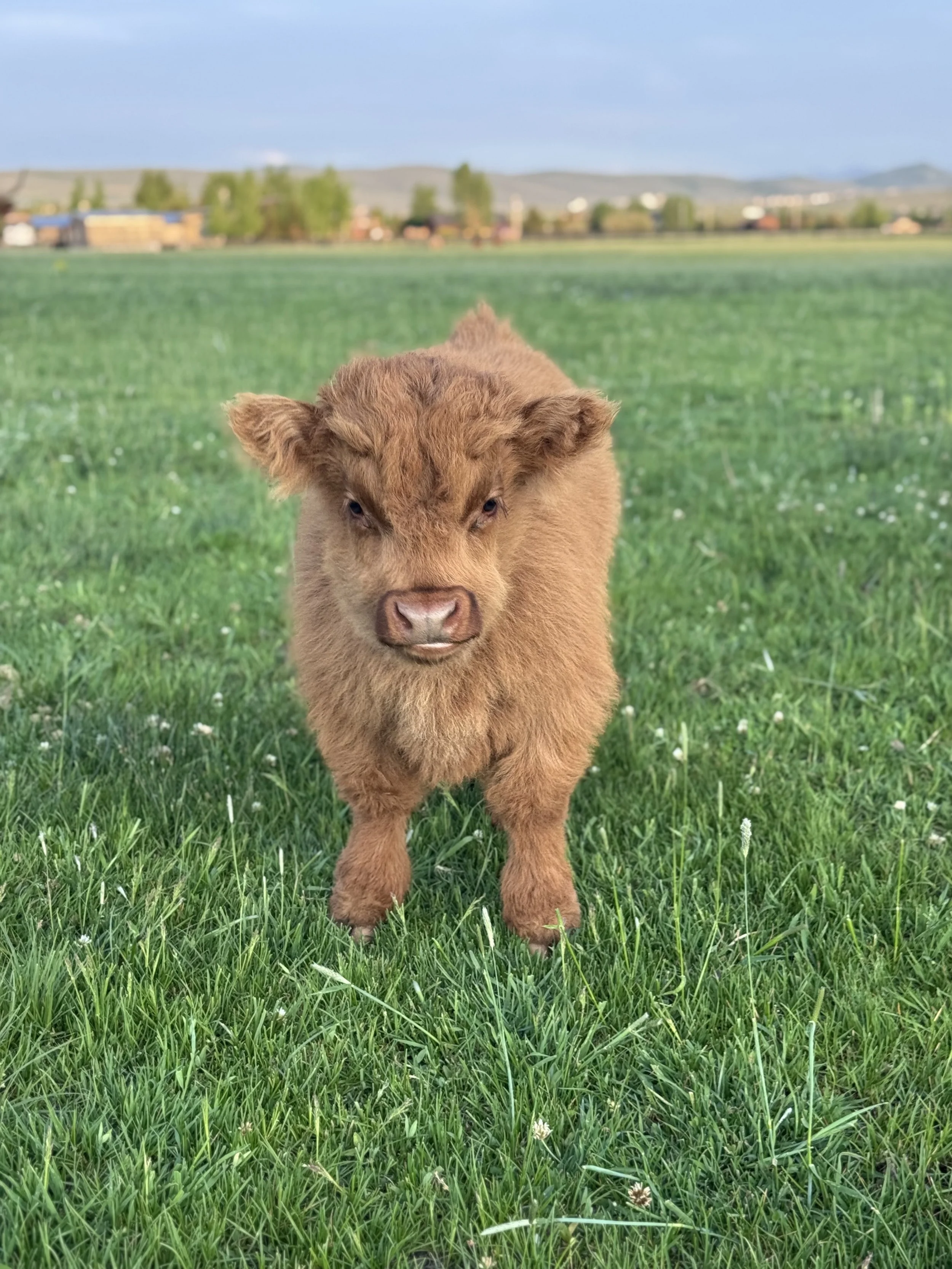
CM: Encounters with the animals can change from day to day. I remember one day, I had a bucket of treats and had a heifer charge me! She used her horns to pop that bucket right out of my hands so she could have the whole bucket to herself! The next day, I would have the babies run in excitement to see me. Other days, I would have to patiently wait till they would come to me. It is very dynamic. Even though they are domesticated animals, they are wild. They have to defend themselves from predators in the mountains. They can be spooked from a storm the night before. Some days are so hot, they will come to be showered by the hose to get some relief! I have cried with mamas who have lost their baby at birth and I have also raised a calf that was rejected by its mother. There is a lot of emotion evoked in me through this process that I have chosen. It can be very humbling.
BD: What does stillness mean to you in that setting, and how does the land shift your mindset, your breath, or the rhythm of your body?
CM: Stillness is at the essence of pasture therapy when you observe the herd from afar. You notice subtleties and interactions that make the experience that much more personal. There also needs to be stillness in the one on one connection with an animal. You want to allow time for the animal to react to your approach. This is where the magic happens and the trust begins. Every year when the foals and calves come to the pasture, I sit in stillness waiting for them to come to me. It can take hours for one moment with an animal to occur. It has taught me patience in the process.
BD: Do you experience Pasture Therapy as a spiritual practice — a form of connection, grounding, or communion with something greater than yourself?
CM: I believe it helps you ground in immense ways, which could be a spiritual practice for some. I believe we all are spirits created from a higher power. When we are present and show love, we can really tap into that connection. This can happen between humans, between animals, even plants. Growth can only thrive in specific energetic vibrations.
BD: What have the animals taught you about trust, patience, letting go, or softening your expectations of yourself and others?
CM: The lessons are endless in the pasture. I feel continually challenged by specific relationships. I want specific heifers to trust me, but it isn’t going to happen unless I work with them everyday. I realize now, we have a mutual respect for one another and they all trust me with their babies. I feel grateful to be trusted with their creation of new life. Most of my dedication is to the babies. I feel honored to help develop their first encounters with humans. This process embodies all the elements of trust, patience, and letting go. In turn, this helps me to practice this in my own life with friends and family. It’s really a full circle experience.
BD: When you first shared this experience with Beau and Tash, what did you hope they would feel, understand, or open themselves to?
CM: I was thrilled to have Beau and Tash feel the magic of the pasture. There’s a sense of wonder and curiosity I would hope they captured. I wanted them to understand that the animals you interact with are mirrors. They feel our nervous systems. We can cultivate safety and connection with them. I also hoped that it would bring an immense amount of joy as well. Most everyone I bring to interact with these animals end up with huge smiles on their faces embodying joy.
BD: For people experiencing Pasture Therapy for the first time, what shifts do you notice — whether in their posture, their presence, or their emotional openness?
CM: I think most people feel a little bit of nerves. I generally just make them crawl through the fence and we go right in. I let people know if a mama cow charges you, you charge her back. This sets the tone of always being aware of your surroundings. Some people have hesitation and some come in strong and the animal backs away. I always lead by example and explain the best way forward to build trust while doing. One animal will generally latch on and they start to build a relationship with a specific person. I get to watch the spectrum of emotion happen all within those first 10 minutes. It’s really quite beautiful to witness. I always try to capture a moment from their experience so they remember the moment more clearly. I cherish all the photos I have of others in their moments of connection in the pasture.
BD: How has embracing this way of living changed you personally — not just as a rancher, but as a woman, a soul, and a human being?
CM: First off, the pace of life. It allows for moments of stillness and connection in a beautiful setting. I feel so grateful to experience that during the summer and fall season each year. This helps me be a more grounded and a present human being in my day to day life. This also adds to me being more resilient to stress, which has helped alleviate the anxiety I used to deal with daily. It has also changed my rhythm of life. It has shifted priorities and allowed me to clearly see how I want to spend my time. It has changed the way I hope to raise children one day. It has deeply enhanced my life in so many ways.
BD: For those who have never experienced open land or the quiet language of a pasture, what is the one truth you hope they understand about its power?
CM: Slow Down and find the magic. Intentionally slowing down allows you to become fully present and engaged, improving your mental well-being, deepening your relationships, and enhancing your appreciation for life.