
Tash Brooks : Interviewed by Beau Dunn
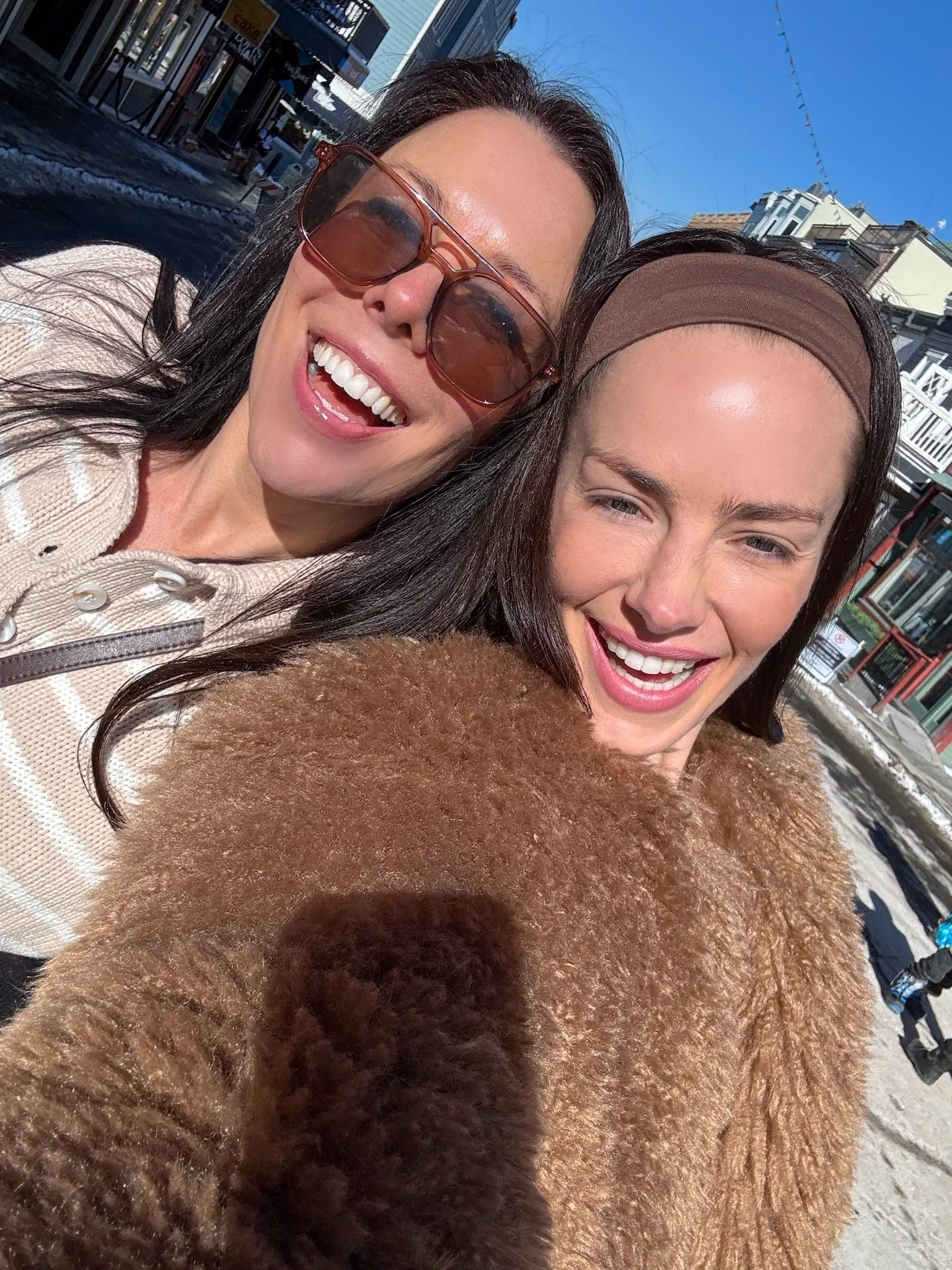
Interviewed by Beau Dunn
A Conversation About Roots, Service, Friendship & Building a Brand With a Soul
1. You grew up in Australia — in a culture that’s more connected to land, animals, space, and simplicity than Beverly Hills ever was.
How did your childhood shape who you are today, and how do you see those early influences woven into Beverly Hills Farm?
I grew up in Australia, where being part of nature wasn’t a hobby, it was just how you stayed alive and awake! You notice the animals, the snakes, the spiders, the way the land shifts with the weather. You learn early that you’re not separate from any of it, you’re part of this fragile, brilliant system that’s much bigger than you and more importantly doesn’t revolve around you.
For me, I think living like that does something to your wiring. It teaches you that real connection has almost nothing to do with what you own and everything to do with how you relate to the world around you; the land, the street you live on, the people at your table, the places that hold your memories.
Beverly Hills Farm is me stitching that girl back into the woman who moved to Los Angeles more than twenty years ago. It’s my declaration that I’m allowed to love the sparkle and still know, in my bones, that my nervous system comes home under trees and open skies. This brand is the bridge between those two truths: the girl who was raised on the beaches and the mountains in Queensland, Australia and the woman who learned to survive in a city. I’m now choosing to belong to myself in both.
2. You’ve dedicated your life to philanthropy and service — it’s one of the truest parts of who you are. We actually met through philanthropic work more than 15 years ago.
What role has giving back played in your life? And how has that heart shaped Beverly Hills Farm — especially when you think about where we can genuinely help others?
Service has always been my way of moving through the world. Long before I had a job title, I knew I wanted to be where people were suffering and where I could make even a tiny dent in that pain. To sit in the hard rooms, help with the hard diagnosis or prognosis. Not to fix it all, but to offer whatever I could and at the very least, to help them feel less alone in their suffering.
Meeting you through philanthropic work over 15 years ago felt like recognizing someone who spoke the same language. It was like, Oh, you’re one of my people. You care about what this does to actual human hearts. You’re one of the most generous, kindhearted people I’ve ever met.
That same heart is baked straight into Beverly Hills Farm. I never wanted this to be a brand that just photographs well. I want it to do something. I want it to be a place where women are cared for, where stories matter, and where a portion of what we create flows back out, whether through funding, workshops that support emotional health, or direct partnerships with causes we love.
When I look ahead, I see Beverly Hills Farm as a vehicle, not just for pretty things, but for good things. A way to gather women who care, to move resources where they’re needed, and to prove that beauty and service were never meant to be separated. They’ve always belonged together.
3. When I asked you to build this brand with me, you didn’t hesitate. What made you say yes so quickly?
When you asked me to build this with you, it didn’t feel like a decision worth more than 0.5 seconds of thought. It was an immediate full body “yes”. It was all aligned, the vision, the work, and our friendship. It almost felt like naming something we were already living. There was this sense of, “Of course we’re the ones to build this. Who else could tell this story?”
4. Our friendship is the foundation of this brand — fifteen years of life, change, heartbreak, laughter, and reinvention.
What has it been like building something from friendship?
Building a brand on top of a 15-year friendship is both the safest and bravest thing I’ve ever done.
The “safe” part is that there’s so much history. We’ve seen each other wrecked and also rising – more than once. We know how each other loves, shuts down, avoids, and tries again. We have a short hand that is really helpful in life and in business. I know when you’re triggered and you know when I’m triggered. That level of honesty and being able to lovingly respond to those tough moments, is a gift.
The “brave” part is that we had to make a decision: the friendship comes first. That means asking hard questions like, “Are we okay?” before, “Is the business okay?” It means apologizing sooner, naming resentments before they calcify, and giving each other permission to be human, not just “on” all the time. We’re doing a really good job of that.
What I’ve learned is this: when women build together from a foundation of real friendship, the work is deeper, messier, and more meaningful. But when we protect the friendship, the work gets better too.
5. You’ve been my rock through all my traveling, my seasons outside LA, and the chaos of life.
How has that shaped your role in Beverly Hills Farm?
Being your “rock” is what we do! That’s a part of our dynamic. We’re different in so many ways but the loyalty and the love we have for one another is one of the things I’m most grateful for in my life.
Showing up behind the scenes has taught me that so much of what makes things beautiful is invisible. I make sure we don’t lose the soul of what we’re doing while everything else is shifting. The follow-up, the planning, the emotional labor, the quiet “I’ve got you.” It’s not as shiny as a launch day, but honestly, that’s where I feel most like myself and where I think the truest work happens.
6. You recently moved too — you’re living the same paradox of Beverly Hills meets farm life.
Where do you feel that contrast the most, and where do you find peace inside it?
I am living the Beverly Hills Farm paradox in real time.
There’s the version of me that knows LA like the back of my hand: appointments, events, the pace, the image. And there’s the version of me that exhaled every time I left. I crave slower mornings, fewer obligations, and more grounded days. I feel that tug when I’m getting dressed, planning my week, or deciding how much of myself to put out in the world. The old script says, “Do more, be more, keep up.” The new script says, “Do less, but do it with your whole heart.”
The peace comes when I stop trying to “pick a side” and let myself be both. That’s what Beverly Hills Farm is: proof that not only are we allowed to be a walking contradiction, we’re ever moving and ever changing. The key is just to be honest with ourselves and in touch.
7. Most people don’t know this, but you’re an incredible baker and cook.
How does food and ritual shape your life?
Food is one of my love languages. Baking and cooking are how I calm my nervous system and connect with the people I love. It’s art, therapy, and service all in one. The holy trinity!
When I’m in the kitchen I can’t answer twenty emails and also whisk a meringue. I have to be there. That presence and awareness is practice in motion. Slowing down in the kitchen teaches me how to slow down in life and to remember that small, ordinary acts, like a cake in the oven, a pot of soup on the stove, often move the needle more in my home than any grand gesture.
That’s what we want for women who find Beverly Hills Farm, tiny rituals that bring them back to themselves.
8. What has been the single most meaningful Beverly Hills Farm moment so far?
The moment I knew, “Oh, this is bigger than a brand,” wasn’t a photoshoot or a perfect graphic. It was a conversation. We were talking about all the women we know who don’t feel like they fully belong anywhere, the mums who aren’t “Pinterest enough,” the women who love their careers but quietly ache for more softness, the ones who feel like they’re too much in some rooms and not nearly enough in others.
And it hit me, we’re not just making hats and journal posts. We’re building a table for women in motion, the ones who’ve spent years trying to contort themselves into everybody else’s boxes. There’s a real kind of suffering that grows in you when you live in that “almost enough” place. It’s pervasive and dangerous when it takes hold. What we wanted was a space where women could lay that down. A place where you’re not just allowed to be exactly who and where you are, you’re celebrated for it. A place where we champion each other in all our evolving, ever-changing, not-finished-yet selves.
9. This was a big year of slowing down for both of us. What did slowing down teach you?
This year forced me to slow down in ways I wouldn’t have chosen. It was a massive year of shedding and shifting. Slowing down sounds cute on Instagram, but in real life but for me, it looks like loss, endings, plans falling apart, identities shifting. It has been wildly uncomfortable and there have been many times that it’s felt like failure.
But here’s what I’ve learned, slowing down is not quitting. It’s choosing to stop sprinting long enough to ask, “Is this even where I want to go?” The shift in me is that I no longer equate constant motion with getting anywhere worthwhile. I’m learning to trust quiet seasons as much as loud ones. Slowing down has made room for Beverly Hills Farm to be built with intention instead of urgency. And that feels right.
10. What have you learned about yourself through building this brand?
This brand has been like holding a mirror up to my whole life. I’ve learned that I’m braver than the version of me who stayed in systems that weren’t working. I’ve learned that my tenderness, the part of me that feels everything deeply, is not something to “get over.” It’s actually the engine for what we’re building.
I’ve been surprised by how healing it is to put all my “selves” in one place: philanthropist, mother, friend, hostess, woman who loves beautiful things, girl who once felt safest around animals and land. The challenge has been letting myself be seen in that wholeness. But the healing is in no longer asking, “Which version of me is allowed here?” and instead saying, “All of me is invited.”
11. What does “meaningful” mean to you now?
There was a time when “meaningful” had to be big: big events, big roles, big numbers, big loud love. If it didn’t look impressive, I didn’t see the same value. Now, meaningful looks close and honest. It’s a late-night text that says, “I’m not okay,” and a real response back. It’s baking something for no reason other than “I thought of you.” It’s one woman sending a message: “I read that thing you wrote. It made me feel less alone.” My definition has shifted from “How many people did this reach?” to “Did this matter to the person it touched?” That’s the bar now. Smaller, deeper, truer.
12. Looking toward 2026 — what are you bringing with you? Leaving behind? Calling in?
Looking toward 2026, I’m bringing with me my hard-won trust in my own voice, my ability to start again, and my refusal to build things that require me to abandon myself. I’m leaving behind chasing approval, staying in rooms that cost me my peace, and measuring my life by output instead of alignment. I’m calling in ease, more aligned opportunities, financial stability that allows generosity, and women who want to do life in a real way, not curated, not performative. More laughter. More creative projects. More spaces where our nervous systems can exhale and our souls can speak up.
13. When you imagine the women who will find us… what do you hope they feel?
When I picture the women who will find us; tired, overstretched, trying to hold up every corner of their lives, I don’t imagine them needing another “to-do.” I imagine them needing a deep breath. Someone to lovingly meet them where they’re at on their quest for more authenticity and interconnectedness. I hope Beverly Hills Farm feels like that breath. I hope they feel seen, not judged. I want them to walk away with permission: to rest, to enjoy beauty without apologizing, to put down something that’s too heavy, to pick up something that feels like joy. A hobby, a hat, a practice. Mostly, I want them to feel less alone and more connected, to themselves, to us, and to each other.
14. How has building this brand shifted our friendship?
Building this brand has taken our friendship out of theory and into practice.It’s one thing to say, “We support each other.” It’s another thing to negotiate timelines, disagreements, exhaustion, and creative differences and still say, “I love you. I’m in this with you.” I’ve learned that healthy female partnership isn’t about never fighting or perfectly aligning on everything. It’s about choosing honesty over resentment, repair over pretending, and mutual respect over ego. It’s about believing that both of us get to win. Our friendship is the soil Beverly Hills Farm grows in. If we keep tending that, with truth, humour, and grace, the brand will be the fruit of that, not the replacement for it.
15. The final question: Why do you think you were meant to help build this?
I think I was meant to help build Beverly Hills Farm because my life has lived in this tension for a long time.
I know what it feels like to be “too much” for some spaces and “not enough” for others. I know what it’s like to love beauty and also be painfully aware of suffering. To be the girl who wants to wear the pretty dress and also stand in the mud and do the hard work. My unique contribution is that I refuse to choose between depth and delight. I am here for both, the real painful conversations and the gorgeous table settings, the grief and the deepest joys over a perfectly baked sourdough. My story, in philanthropy, motherhood, loss, reinvention, and starting over, allows me to look at women who feel like they don’t fit any template and say, with total conviction: “You’re not the problem. The boxes are. You are exactly the kind of woman we built this for.”